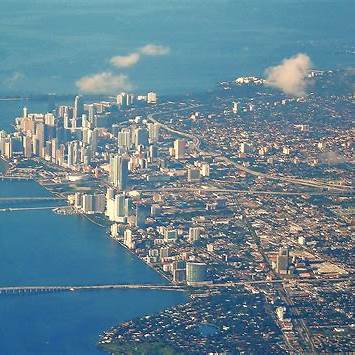
A lawsuit filed by local activist Marvin Dunn has forced a circuit judge to intervene, temporarily halting the transfer of nearly three acres of prized downtown Miami land to Donald Trump’s presidential library foundation. The plot, owned by Miami Dade College until recently, was to be conveyed via a state fund overseen by Florida officials. But Judge Mavel Ruiz, ruling this week, found serious procedural flaws in how the transfer was approved.
Dunn’s lawsuit hinges on the claim that the Miami Dade College Board of Trustees violated Florida’s open-government (Sunshine) law by failing to provide meaningful notice before voting to transfer the property. According to the complaint, the agenda for the special meeting held on September 23 lacked specifics—no parcel was named, no purpose clearly stated—and the meeting was not livestreamed, unlike all others that year. What should have been routine transparency, Dunn argues, was instead a calculated ambiguity that excluded the public and any possible dissent.
In her ruling, Judge Ruiz emphasized that this injunction is not rooted in politics but in due process. The judge noted the public’s right to know what is being decided when gobs of public land are at stake. She ordered that the land cannot be transferred until further hearings illuminate whether state and local officials properly followed the law. The order throws the library plan into uncertainty and may delay the deal for months—or longer.
Supporters of the transfer, including the college’s legal team, defend the board’s actions as sufficient under Florida law. They argue that there is no requirement for ultra-specific agendas in all cases, and that the trustees were permitted to discuss whatever matters they wished in their meeting. They also assert that the public was not deprived any legal right, and that ulterior motives claim too much about the timing.
After the college board’s vote, the property’s control was passed to a state trust. Governor Ron DeSantis and the Florida Cabinet then approved the deed to the Trump Library Foundation, whose trustees include Eric Trump, Michael Boulos, and attorney James Kiley. The property, appraised at over $67 million, occupies one of the last undeveloped lots along Biscayne Boulevard near the Freedom Tower and overlooks a waterfront park and the Miami Heat arena.
The significance of the site is not just monetary. Under the terms of the deal, the library must begin construction within five years and include “components” accessible to the public. Yet critics warn that the agreement is light on guarantees: it does not obligate the foundation to deliver public benefit in any binding way, nor does it assure any return to the college itself.
Dunn’s legal team argues that the opaque handling of the transfer itself is a violation grave enough to unravel the deal entirely. “When a public institution gives away that much land, citizens have the right to know which land, why, and under what terms,” said Dunn’s lead counsel in court filings. The activists contend that the rushed and loosely framed process betrayed the public trust and leveraged political connections to sweep the deal through before scrutiny could take hold.
What happens next will likely center on a series of hearings on whether the board’s notice procedures satisfied Florida law, and whether the remedy should be more than a mere injunction. If Judge Ruiz concludes that the board acted improperly, the transfer could be rescinded or sent back for new votes under more transparent guidelines.
For now, the land remains in limbo. The injunction may delay the Trump Library timeline and could push planners to revisit alternative sites. But more importantly, the ruling reopens questions about how public assets are governed—and how easily monumental deals can be fast-tracked when politics, property, and power intersect.